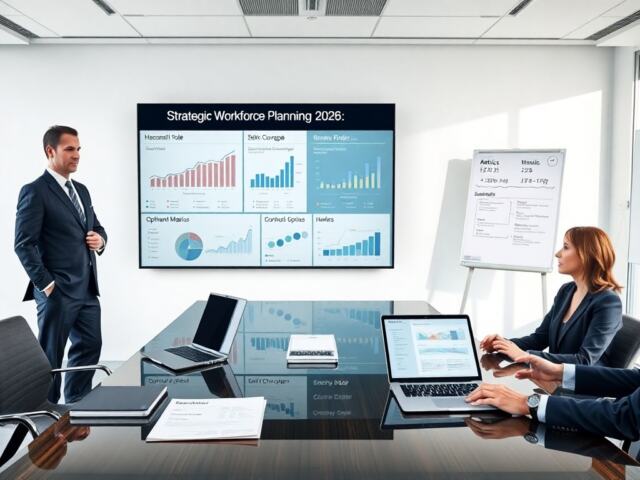
An employee development plan helps a worker and a manager map skill growth and career steps. The plan sets goals, lists learning activities, and assigns timelines. It also defines metrics and check-ins. This guide explains what an employee development plan is, why it matters, how to build one, and offers a ready template with 90-day and 12-month timelines managers can use.
Key Takeaways
- An employee development plan is a collaborative roadmap that helps employees and managers map skill growth and career progression with clear goals and timelines.
- Setting SMART goals aligned with the employee’s role and career objectives ensures measurable and time-bound progress in the development plan.
- Assessing current skills and identifying gaps allows prioritization of learning needs to focus on quick wins and strategic growth areas.
- Choosing targeted development activities such as training, coaching, and stretch assignments supports effective skill advancement within the plan.
- Regular check-ins and success metrics keep the employee development plan flexible, actionable, and aligned with performance reviews and business goals.
- Using a structured template with 90-day and 12-month goals helps managers implement employee development plans that build skills and prepare employees for new roles.
What Is An Employee Development Plan And Who Needs One
An employee development plan is a written roadmap that guides skill growth and career progress. A manager and an employee create the plan together. The plan states clear goals, required skills, learning actions, and review dates. A junior worker uses a plan to speed learning. A mid-level worker uses a plan to prepare for leadership or new roles. A manager uses a plan to align team skills with business needs. The organization uses the plan to reduce turnover and close skill gaps.
Key Benefits For Employees, Managers, And The Organization
An employee development plan gives an employee clear goals and a path to promotion. It increases job satisfaction and focus. A manager gains visibility into team skills and progress. The manager can assign tasks that match growth needs. The organization gains higher retention and stronger internal talent pipelines. The plan reduces hiring costs and shortens time to competence. The plan also creates measurable learning outcomes that support performance reviews and workforce planning.
How To Create An Effective Employee Development Plan
A simple process helps craft an effective plan. The manager and employee agree a development timeline first. The team list core responsibilities and future role needs next. They write measurable goals and select learning steps. They schedule regular check-ins and define success metrics. They keep the plan flexible and update it after each review. The plan stays short, focused, and actionable. The following subsections show three core steps.
Set Clear, SMART Goals Aligned To Role And Career Path
A goal must be specific and time bound. The manager and employee state the desired outcome and the completion date. They make the goal measurable with clear evidence of success. They confirm the goal relates to current role tasks or the next role. They set one to three priorities per cycle. They avoid vague aims and long lists. They record each goal in the plan and attach a success metric and a review date.
Assess Current Skills, Identify Gaps, And Prioritize Needs
The manager and employee list current skills and recent work samples. They compare that list to role requirements or promotion criteria. They mark gaps that block progress. They rank gaps by business impact and learning cost. They choose short wins first to build confidence. They also pick one strategic gap that leads to future roles. They update the skill list after each quarter and adjust priorities.
Choose Development Activities, Resources, And Support Structures
The plan lists specific activities for each goal. Activities can include on-the-job tasks, online courses, coaching, and stretch assignments. The manager assigns a mentor or a peer reviewer when needed. The plan names the resource, the expected time commitment, and the cost if any. The plan sets weekly or biweekly check-ins and a formal review at 90 days. The plan notes how the manager will measure progress and remove blockers.
Template, 90-Day/12-Month Timeline, And Practical Examples For Managers
A simple template speeds adoption. Section A lists employee name, role, and review dates. Section B lists one to three SMART goals with metrics. Section C lists current skills, gaps, and priority rank. Section D assigns activities, owner, time, and resources. Section E sets check-in cadence and final deliverables. For a 90-day plan, managers set two short goals: one skill build and one project task. For 12 months, managers add one leadership goal and one cross-functional rotation. Example: a marketing associate sets a 90-day goal to run a paid campaign and a 12-month goal to lead a product launch. Example: a software engineer sets a 90-day goal to ship a feature and a 12-month goal to mentor a junior hire.