| Planning effect | What the guidance describes | Planning use |
|---|---|---|
| Right-sized team | Aim for the right size, shape, cost and agility to meet current and future business demands | Use these four dimensions as the test for every headcount request. |
| Fewer staffing mismatches | Helps avoid overstaffing, understaffing and skills gaps | Compare current staffing levels with anticipated hiring needs before approving requisitions. |
| Cost control | Combined elements lead to a significant reduction or optimisation of costs, described qualitatively | Treat this as direction of travel. Set your own baseline before claiming savings. |
| Clear accountability | Outputs include identified talent gaps, prioritised workforce initiatives and assigned responsibilities | Give every initiative a named owner before the plan is signed off. |
| Measurable progress | KPIs such as time-to-hire, retention rates and employee engagement scores | Agree the metrics before the plan starts, so success is judged against something fixed. |
These effects are drawn from a guide to workforce planning components and an overview of strategic workforce planning.
Strategic workforce planning is a systematic, data-driven process that aligns the workforce with short- and long-term goals. It pays off when each stage ends in a decision and a named owner.
The topic sits inside the wider question of workforce skills and competitiveness. The sections below start with what planning changes for the business, then turn to the process and the metrics that keep it honest.
Why planning affects competitiveness
The practical case for strategic workforce planning is that it lets an organisation shape its people to its strategy instead of reacting to vacancies. A practitioner guide frames the goal as the right size, shape, cost and agility to meet current and future business demands. Each of those four dimensions leads to a different decision. Size drives hiring volume. Shape drives the mix of roles and skills. Cost drives budget. Agility drives how quickly you can redeploy or retrain.
The same guide links planning to better operational efficiency and a competitive edge in an organisation’s markets, and says it helps organisations optimise their human capital investments. These are qualitative benefits. No figure is attached to them, so do not promise a percentage saving or revenue gain in a business case. Instead, name the specific decision the plan will improve, such as which roles to fill first or where to invest in training, and measure that decision afterwards.
Workforce forecasting is the input that makes this possible. Forecasting means projecting future talent needs from business strategy and market trends, rather than extrapolating last year’s headcount. A forecast built on strategy tells you which capabilities the business will need. One built on history only tells you what you already have.
Planning also reduces two opposite risks. Analysing current staffing levels and anticipating future hiring needs is how an organisation makes sure it is neither overstaffing nor understaffing. That guide adds that the combined effect leads to a significant reduction or optimisation of costs, again without quoting a figure.
Finding skills gaps before they cost you
A skills gap is the difference between the capabilities the strategy needs and the capabilities the current workforce holds. The planning cycle treats identifying skill gaps and talent surpluses as a distinct step. Surpluses matter as much as shortages. A surplus in one skill area may be the internal supply for a shortage elsewhere, which is cheaper to explore than going straight to the external market.
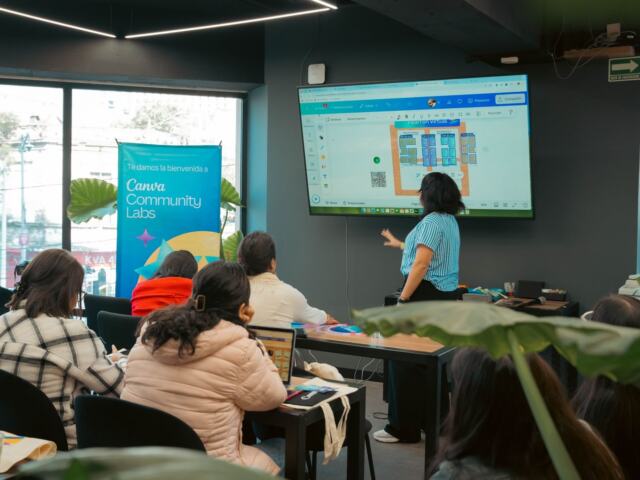
Gap assessment works best when the data is visible to managers and HR together. A team that reviews a skills inventory on a shared screen is more likely to spot where one person’s capability is the only cover for a critical skill.
If you need a practical format for recording who can do what, Skills Matrix Examples: Build A Practical Template To Map Team Strengths In 2026 – Competitiveness shows how to lay out a matrix. When the gaps cluster in leadership roles, Corporate Succession Planning: The Practical 2026 Playbook To Protect Leadership, Value, And Continuity – Competitiveness covers the continuity side of the same problem.

A scenario: senior managers retiring
Scenario planning turns a known risk into a timed set of choices. One practitioner guide offers a simple case: you know that five of your senior managers will retire in three years’ time. A skills gap analysis is what reveals when people are likely to leave, and the scenario shows why that matters. Three years is long enough to develop internal successors, but only if the plan starts now.
The scenario forces a decision on each critical capability. These are the main choices to put in front of leaders:
- Develop from within. The guide stresses that planning is as much about developing and upskilling the current workforce as about hiring new people. This suits roles where internal candidates already hold part of the capability and the lead time allows for growth.
- Close the gap with training. Upskilling programmes are named as a way to bridge skill gaps. They suit gaps that are narrow and well defined rather than a complete absence of a skill.
- Hire externally. Choose this when no internal pipeline exists or the capability is new to the organisation. Start early, because hiring into senior roles is not something to compress into the final months.
- Combine approaches. Treat the choice as a mix by role. A single approach across every retiring post rarely fits.
Whatever the mix, the output is the same: a list of roles at risk, a chosen response for each, and a date by which the response must be under way.
The planning process, stage by stage
The CIPD, the UK professional body for people practitioners, publishes a guide to strategic workforce planning that sets out two methodologies. One is a six-stage planning framework, which offers its stages in a set order. The other is a seven ‘rights’ model, which lists seven areas of the business to consider. The guide says people practitioners can use it to structure their workforce planning. Choose the six-stage framework when you need a sequence to follow, and use the ‘rights’ model as a checklist of business areas.
The sequence below combines the steps described in practitioner guides. It is a working version, not a reproduction of the CIPD stage names. Each step ends in a concrete output.
- Define the goals. Consider the long-term goals of the organisation first. Output: a short statement of the strategy the workforce must support.
- Analyse the current workforce. Record roles, skills and staffing levels. Output: an inventory of current capability.
- Forecast future needs. Project talent needs from business strategies and market trends. Output: a forecast of the roles and skills required.
- Identify gaps and surpluses. Compare the inventory with the forecast. Output: a list of skill gaps and talent surpluses.
- Prioritise and assign. Rank the workforce initiatives and give each an owner. Output: prioritised initiatives with clear responsibilities.
- Measure and adjust. Set clear metrics and KPIs for judging whether the plan works, then review results against them. Output: a regular review that feeds back into the forecast.
Two cautions follow from the order. Do not skip the goals step to get to the data, because without a strategy the forecast has nothing to anchor it. And do not leave the metrics until the end. The guidance is to establish clear metrics and KPIs for measuring the success of the effort, and doing that at the planning stage prevents arguments about what success meant.
Metrics that show whether the plan works
A small, consistent set of measures is easier to act on than a long dashboard. The practitioner guidance suggests tracking key performance indicators for development initiatives, with examples that are easy to collect from existing HR records:
- Time-to-hire. Shows how quickly the organisation fills roles. A rise suggests the external pipeline for a skill is thinner than the forecast assumed.
- Retention rates. Show whether people stay, which tests whether development and redeployment choices are working.
- Employee engagement scores. Indicate how people respond to the changes the plan brings, such as new roles and training.
These are examples rather than a mandatory list. Pick the measures that match the initiatives you prioritised in the process. If an initiative targets internal succession, track the measure that would show it working. Review them on a fixed schedule and feed the results back into the forecast, as in the final step above.
Frequently asked questions
Is there one standard number of steps in a workforce planning process?
No. The CIPD offers a six-stage framework and a separate seven ‘rights’ model, and practitioner guides describe their own sequences. What stays constant is the logic: start from strategy, understand the current workforce, forecast, find gaps, act and measure.
Does workforce planning guarantee lower costs?
No guarantee is supported. Practitioner guidance says the combined elements lead to a significant reduction or optimisation of costs, but gives no figure. Set a baseline for the costs you care about and compare against it after the plan has run.
Who is the CIPD guide written for?
It is written for people practitioners, who can use it to structure their workforce planning. It is a useful reference when you need a defined sequence or a checklist of business areas to review.
Is upskilling a replacement for hiring?
No. Planning is described as being as much about developing and upskilling the current workforce as about hiring new people. Use each where the lead time and the size of the gap fit it.